

 Send Email
 Whatsapp


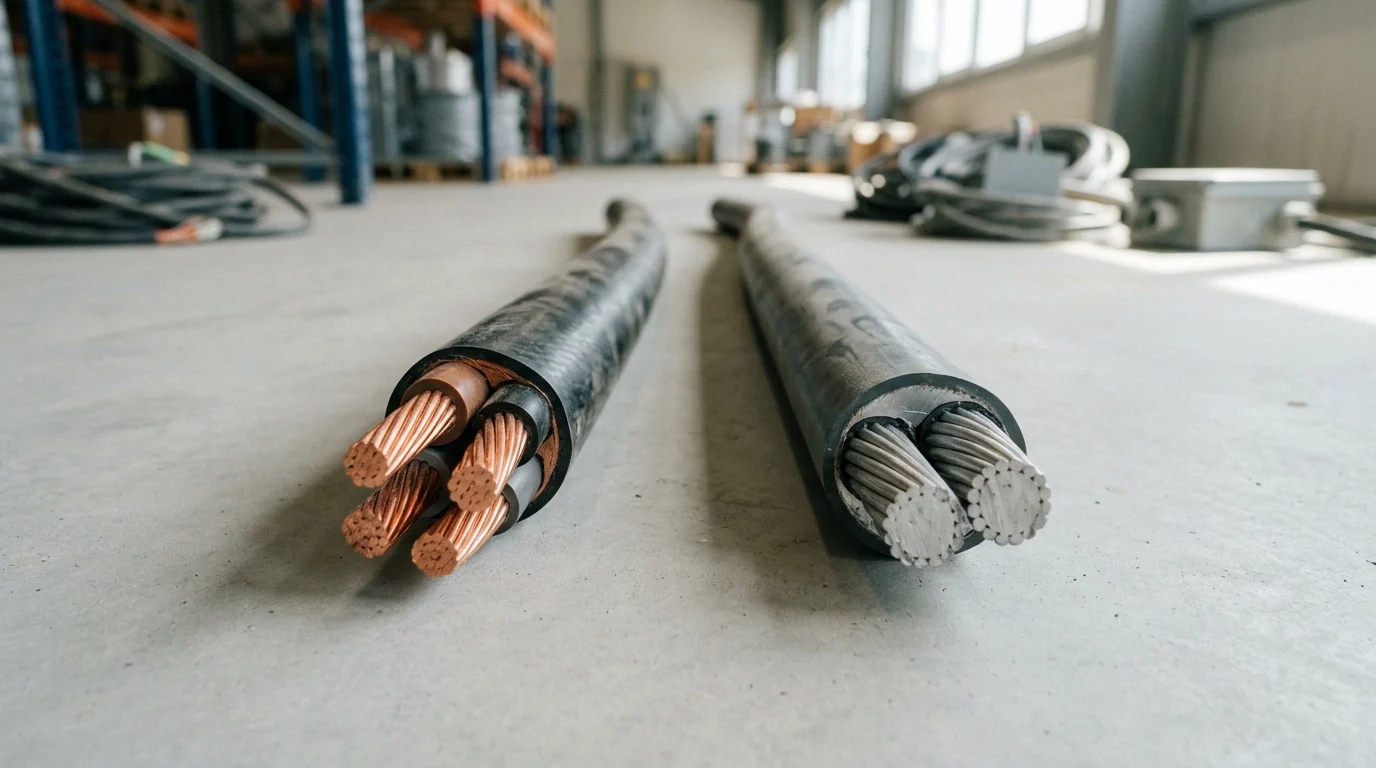
The lowest cable quote is rarely the lowest-cost cable over the life of a facility. In commercial and industrial electrical systems, conductor choice affects not only procurement budgets but also installation labor, conduit sizing, terminations, maintenance routines, energy losses, theft exposure, and end-of-life recovery value. Copper and aluminum each have a valid business case, but the right choice depends on load profile, run length, operating hours, environmental conditions, and financial assumptions. This article frames the decision through a lifecycle cost lens, showing how to compare upfront savings against decades of operational impact so procurement teams and facility managers can make a defensible, data-aware selection.
How to Frame Copper vs Aluminum Cable Lifetime Cost
When evaluating electrical infrastructure for commercial or industrial projects, selecting the right conductor material is a critical procurement decision. The debate between copper and aluminum frequently centers on initial purchase prices, but this narrow view masks the true financial impact of the selection. To determine which option genuinely reduces lifetime operational costs, establishing a comprehensive analytical framework is essential. The optimal choice ultimately depends on load profiles, run lengths, environmental conditions, and capital constraints.
Lifetime cost analysis requires looking far beyond the initial invoice. By examining the complete lifecycle of the installation—from procurement and installation to maintenance, energy losses, and eventual decommissioning—facility managers can make financially sound decisions that protect long-term operational budgets.

Define Cost Boundaries
Accurately assessing copper versus aluminum cable lifetime costs begins with defining cost boundaries. A standard capital expenditure (CapEx) evaluation typically captures the raw material price of the conductors, required conduit sizing, and initial labor needed for the cable pull. Historically, aluminum conductors offer a compelling upfront advantage, often pricing out at 30% to 50% cheaper per foot than copper equivalents, depending on market conditions.
However, true cost boundaries must also include operational expenditures (OpEx). This includes the financial impact of I²R (resistive) energy losses over a 20- to 30-year facility lifespan, the cost of routine thermal imaging, and maintenance labor. Calculating only the CapEx risks artificially inflating the viability of a material that might incur higher costs through long-term inefficiencies. To apply this framework directly, decision-makers can calculate the Net Present Value (NPV) using a standard formula:
Total Lifetime Cost = CapEx (Material + Conduit + Labor + Terminations) + NPV of 20-Year I²R Energy Losses + NPV of Maintenance – NPV of Scrap Value.
Include Commercial Variables Beyond Purchase Price
Beyond the raw purchase price of the cable, several commercial variables factor into cost models. To see the full cost picture beyond material and energy losses, consider these installation and termination differences:
- Terminations: Because aluminum requires specialized bi-metallic lugs and the application of anti-oxidant joint compounds to prevent galvanic corrosion, termination costs are inherently higher. Unlike copper oxide, which remains electrically conductive, aluminum oxide is highly resistive.
- Labor & Maintenance: Compliance with termination requirements often mandates specific engineering reviews when swapping materials. While modern aluminum alloys are stable, historical concerns often keep torque checks in maintenance protocols, adding to lifetime labor.
- Security: Copper's high value introduces a real-world theft risk during construction and operation, potentially requiring enhanced site security that adds to the project's CapEx.
End-of-life scrap value also affects total cost of ownership. When decommissioning a facility, copper retains a remarkably high salvage value. While historical prices have sometimes ranged from $3.00 to $3.50 per pound for copper scrap, whereas aluminum scrap might fetch $0.50 to $0.70 per pound, these figures are highly volatile and regional. They should serve as illustrative examples rather than reliable inputs in a generic financial model. Nevertheless, over a massive industrial installation, this discrepancy can significantly shift the lifetime financial equation.
Where Performance Differences Affect Lifetime Cost
The physical properties of the conductor material directly dictate the electrical and mechanical performance of the system. These performance differences are primary drivers of ongoing operational expenses. Understanding how conductivity, thermal dynamics, and physical footprint interact allows engineers to accurately forecast where hidden costs will emerge over the decades-long life of electrical infrastructure.
Compare Conductivity, Ampacity, Voltage Drop, and Heat
The baseline metric for conductor performance is the International Annealed Copper Standard (IACS). Copper serves as the benchmark at 100% IACS conductivity, whereas electrical-grade aluminum alloys typically register around 61% IACS. Because aluminum is less conductive, U.S.-specific National Electrical Code (NEC) ampacity tables—as well as international equivalents like IEC or BS standards—typically require upsizing aluminum cables by one or two American Wire Gauge (AWG) sizes to match a given copper run. This necessitates a cross-sectional area roughly 56% larger than copper, often requiring larger, more expensive conduits.
This upsizing also impacts voltage drop and heat generation. Higher resistance in improperly sized aluminum runs leads to increased energy dissipation in the form of heat. However, it is crucial to clarify that aluminum's higher I²R losses are a penalty only when the cable is not properly upsized. When sized correctly to match the resistance of a copper run, aluminum approaches comparable resistive loss per ampacity. In this scenario, the cost argument shifts away from energy waste and toward the CapEx of larger conduits and specialized terminations.
Additionally, aluminum has a higher coefficient of thermal expansion, meaning it expands and contracts more significantly under load cycling. While older aluminum iterations suffered from cold flow, modern AA-8000 series alloys offer vastly improved stability. When installed correctly with proper hardware, routine torque checks are no longer strictly mandatory, though they frequently remain in facility maintenance protocols.
Build a Material Cost Comparison Table
To visualize how these physical properties translate into commercial realities, a comparative material matrix is useful. This helps quickly assess the trade-offs between upfront savings and long-term performance constraints.
| Performance Metric | Copper Cable | Aluminum Cable |
|---|---|---|
| Conductivity (IACS) | 100% | 61% |
| Cross-Section for Equal Ampacity | Base (1.0x) | ~1.56x larger |
| Weight Ratio (Equal Ampacity) | Base (100%) | ~50% lighter |
| Thermal Expansion Coefficient | 16.6 µm/(m·K) | 23.1 µm/(m·K) |
| Typical Upfront Material Cost | Baseline (Higher) | 30% to 50% Lower |
| Estimated Energy Loss (I²R) | Lower (highly efficient) | Higher (unless upsized appropriately) |
| Maintenance Frequency | Standard | Potentially higher (termination checks) |
| Salvage Value | High (volatile/regional) | Low (volatile/regional) |
While the table clearly illustrates the upfront cost and weight advantages of aluminum, it also highlights the thermal, volumetric, and long-term OpEx penalties.
How to Decide Which Cable Reduces Operational Costs
When evaluating the copper vs aluminum cable lifetime cost, I always advise project managers to look beyond the initial purchase price on the supplier's invoice. True operational savings depend entirely on matching the physical and electrical properties of the conductor to the specific demands of your facility.
Model Load and Installation Conditions
To make an accurate assessment, we must first model the anticipated electrical load and environmental variables. Because aluminum has higher electrical resistance than copper, it requires a larger cross-sectional area—typically one to two wire gauges larger—to safely carry the same ampacity.
When modeling your installation, consider these primary factors:
- Space constraints: If you are retrofitting an existing building, upgrading to aluminum might require replacing existing conduits to accommodate the larger cable diameter. This added labor and material expense can quickly erase upfront savings.
- Thermal cycling: Aluminum expands and contracts more significantly than copper under heavy electrical loads. Modeling your peak continuous loads helps determine if the installation will require specialized bi-metallic connectors and more frequent torque maintenance.
I recommend consulting the latest guidelines from the National Fire Protection Association (NFPA) to calculate exact conduit fill limits and ampacity ratings for both materials before making a procurement decision.
Identify When Copper Delivers Lower Lifetime Cost
While aluminum is the undisputed standard for long-distance utility transmission due to its lightweight nature, I find that copper frequently delivers a lower lifetime cost in specific commercial and industrial applications.
You should opt for copper when your project involves:
- High-load, continuous operations: Copper possesses superior electrical conductivity. Over a 20- to 30-year lifecycle in energy-intensive facilities like data centers or manufacturing plants, copper's lower resistance translates directly into reduced $I^2R$ (heat) energy losses, lowering monthly utility bills.
- Harsh or maintenance-restricted environments: Copper terminals are highly stable and less prone to galvanic corrosion or "creep" (loosening over time). If your facility is located in a corrosive coastal area or lacks the budget for regular maintenance schedules, copper's reliability prevents expensive operational downtime and routine re-torquing costs.
Key Takeaways
- Compare copper and aluminum using total lifetime cost, not purchase price alone.
- Aluminum cable may be 30% to 50% cheaper per foot upfront, but added termination, conduit, and maintenance costs must be included.
- Copper’s higher conductivity can reduce I²R energy losses over a 20- to 30-year facility lifespan.
- Aluminum installations require compatible lugs, anti-oxidant compounds, and proper torque practices to control long-term reliability risks.
- Use net present value to compare CapEx, energy losses, maintenance, and scrap value on the same financial basis.
- Copper’s higher scrap value can improve its end-of-life economics, but theft risk may increase security costs.
Frequently Asked Questions
Is aluminum cable always cheaper than copper cable?
No. Aluminum often costs 30% to 50% less per foot upfront, but larger conductor sizes, special terminations, maintenance, and higher energy losses can reduce or eliminate that savings over the cable’s service life.
Why can copper reduce lifetime operational costs?
Copper has higher conductivity, which can lower I²R energy losses over long operating periods. It also typically requires simpler terminations and may have higher scrap value at decommissioning.
When does aluminum cable make better financial sense?
Aluminum can be cost-effective when upfront budget is tight, cable runs are large, weight matters, and the design properly accounts for larger conductor size, compatible lugs, anti-oxidant compound, and maintenance requirements.
What costs should be included in a lifetime cable analysis?
Include material, conduit, labor, terminations, maintenance, thermal inspections, energy losses over 20 to 30 years, theft risk, and expected scrap value discounted to net present value.
Do aluminum cable terminations require extra attention?
Yes. Aluminum terminations commonly require bi-metallic lugs, anti-oxidant compounds, correct torque, and compatibility checks because aluminum oxide is resistive and poor termination practices can increase heat and risk.