
 Send Email
 Whatsapp


Introduction
Choosing a photovoltaic DC cable supplier for an industrial solar project is a technical and commercial decision with long-term consequences. Cable quality influences safety, energy yield, maintenance frequency, and compliance across the entire balance of system, even though it represents a relatively small share of total project cost. This article explains what distinguishes a top-tier Solar Cable manufacturer, from material selection and certification standards to production consistency, testing capability, and delivery reliability. By the end, you will have a practical framework for comparing suppliers and reducing procurement risk in utility-scale and large commercial installations.
Why Selecting the Right Solar Cable Manufacturer Matters
Procuring components for utility-scale photovoltaic arrays requires strict attention to detail, as the integrity of the electrical balance of system directly impacts the long-term profitability of the asset. While photovoltaic modules and inverters command the largest share of procurement budgets, the direct current (DC) wiring infrastructure acts as the circulatory system of the entire power plant. Although wiring typically accounts for just 1% to 2% of total initial capital expenditure, substandard cabling is responsible for a disproportionate percentage of system faults, arc flashes, and unplanned downtime. Selecting a specialized manufacturing partner is therefore a strategic imperative rather than a simple commodity transaction.
Defining Solar Cable in Industrial Procurement
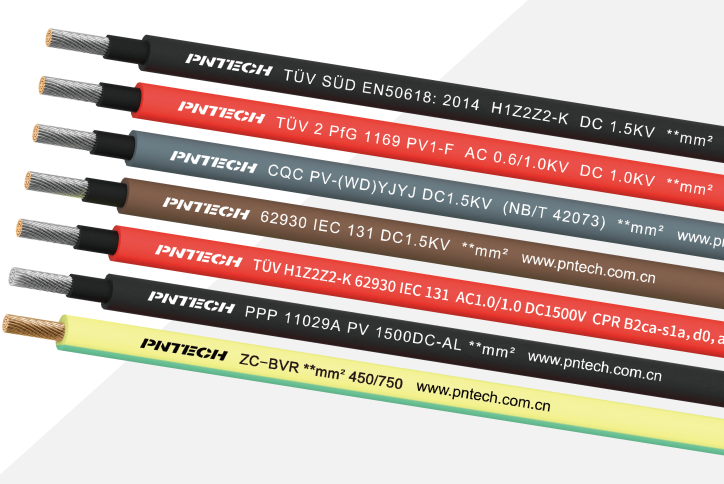
In the context of industrial procurement, a specialized SOLAR CABLEis distinctly engineered compared to standard electrical wiring. These cables are designed specifically to Interconnect Solar panels and route direct current to combiner boxes and central inverters across expansive terrains. Modern industrial specifications demand that these cables safely handle system voltages up to 1500V DC, a standard that minimizes transmission losses in multi-megawatt installations. Procurement teams must source cables featuring advanced electron-beam cross-linked insulation, ensuring they can withstand decades of exposure to harsh environmental variables. These variables include intense ultraviolet radiation, high ozone concentrations, and extreme weather fluctuations common in desert, coastal, or floating solar applications.
Commercial, Technical, and Operational Risks
The risks associated with selecting an inferior manufacturing partner are substantial and multifaceted. Commercially, a voltage drop exceeding 2%—often caused by inadequate conductor cross-sections or poor copper purity—translates into massive cumulative energy generation losses over a standard 25-year project lifespan. Technically, inferior insulation materials are highly susceptible to micro-cracking, water ingress, and thermal degradation. These vulnerabilities dramatically increase the operational risk of ground faults, inverter tripping, and catastrophic electrical fires. Remediating these failures requires extensive diagnostic labor, system de-energization, and replacement costs that far exceed any initial capital savings gained from choosing a lower-tier supplier.
Technical, Compliance, and Quality Benchmarks
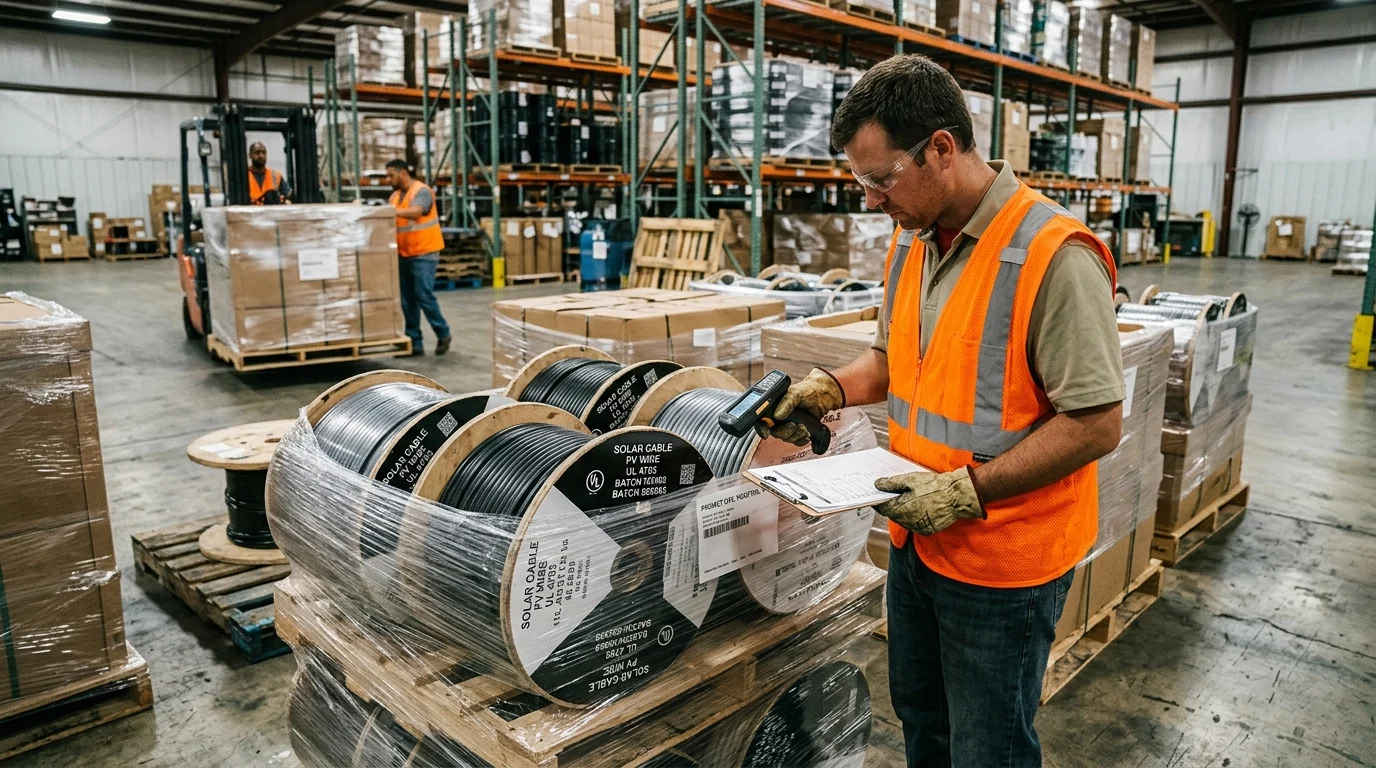
Evaluating a manufacturer requires a rigorous technical assessment of their product lines, material sourcing, and quality assurance frameworks. Top-tier suppliers distinguish themselves by maintaining strict adherence to international electrical standards and utilizing premium raw materials that guarantee performance stability under maximum load and severe ambient conditions.
Specifications, Materials, and Performance Ratings
The fundamental performance and longevity of a direct current cable are dictated by its conductor material and insulation compound. Industry best practices mandate the use of Class 5 flexible tinned copper conductors, which provide superior corrosion resistance and flexibility compared to bare copper or aluminum alternatives. The insulation and outer jacket materials must utilize Cross-linked Polyolefin (XLPO). This specialized polymer ensures operational stability across a broad temperature range of -40°C to +120°C, preventing the jacket from melting during peak summer irradiance or fracturing during freezing winter nights. Buyers must carefully evaluate these specifications against project requirements.
| Feature | Standard Commercial Grade | Premium Industrial Grade |
|---|---|---|
| System Voltage Rating | 1000V DC | 1500V DC |
| Conductor Material | Bare Copper / Aluminum | Tinned Stranded Copper (Class 5) |
| Insulation Polymer | Standard PVC | Electron-beam Cross-linked XLPO |
| Expected Lifespan | 10 - 15 Years | 25+ Years |
| Operating Temperature | -15°C to +90°C | -40°C to +120°C |
Certifications, Testing, and Traceability
Reputable manufacturers will provide comprehensive documentation proving compliance with rigorous global standards, most notably EN 50618 (which designates the H1Z2Z2-K cable type) and UL 4703 for the North American market. Buyers must verify that the supplier maintains active ISO 9001 and ISO 14001 certifications for their production facilities. Furthermore, elite manufacturers implement automated inline testing, such as high-voltage spark testing, thermal endurance trials, and dimensional laser scanning, to ensure that manufacturing defect rates remain strictly below the 0.1% threshold. Complete batch traceability—from the initial raw copper rod to the finished, serialized spool—is a non-negotiable benchmark for industrial quality assurance and warranty claims.
How Buyers Should Compare Solar Cable Suppliers
Beyond technical specifications and laboratory testing, the commercial and operational capabilities of a manufacturer determine their viability as a long-term supply chain partner. Procurement professionals must evaluate suppliers based on their ability to deliver high volumes consistently, manage logistical complexities, and offer a transparent, competitive cost structure that aligns with project financing.
Sourcing, Logistics, Lead Time, and Total Cost
Supply chain reliability is critical for maintaining strict project construction schedules and avoiding costly delays. Industrial buyers must assess a manufacturer's production capacity and standard Minimum Order Quantities (MOQs), which typically range from 10 kilometers to 50 kilometers for custom cross-sections, specific jacket thicknesses, or color-coded runs. Lead times are another crucial metric; tier-one suppliers generally maintain a reliable turnaround time of 4 to 8 weeks from the issuance of a purchase order to port departure. When calculating the Total Cost of Ownership (TCO), buyers must factor in shipping volumes, import duties, and packaging durability. For example, reinforced wooden drums are absolutely necessary to prevent transit damage for heavy, large-scale orders shipped via ocean freight.
Supplier Qualification Process
Establishing a robust supplier qualification process mitigates downstream execution risks and ensures alignment between project developers and manufacturers. Procurement teams should initiate this process by requesting independent third-party laboratory test reports—such as those from TÜV Rheinland, VDE, or UL—to independently validate the manufacturer's internal data sheets. The qualification protocol should also include a comprehensive factory audit to physically inspect extrusion machinery, copper drawing processes, and raw material storage conditions. Finally, analyzing the supplier's financial stability, their adherence to international trade compliance, and their track record of deploying multi-megawatt products in similar climatic zones provides the necessary confidence to award large-scale procurement contracts.
Key Takeaways
- The most important conclusions and rationale for SOLAR CABLE
- Specs, compliance, and risk checks worth validating before you commit
- Practical next steps and caveats readers can apply immediately
Frequently Asked Questions
What voltage rating should industrial solar DC cables support?
For most modern utility and C&I projects, specify 1500V DC cables to reduce losses and match current system designs.
Which conductor and insulation materials are best for solar cable?
Choose Class 5 flexible tinned copper conductors with XLPO insulation and jacket for corrosion resistance, flexibility, and long outdoor life.
What certifications should a top photovoltaic DC cable manufacturer provide?
Look for EN 50618 or UL 4703 compliance, plus active ISO 9001 and ISO 14001 certifications for the production facility.
How can buyers verify cable quality before placing a large order?
Request test reports, batch traceability records, and details on inline checks like spark testing, thermal testing, and dimensional inspection.
Why is a low-price solar cable supplier risky for industrial projects?
Cheaper cables can cause higher voltage drop, insulation failure, inverter trips, and costly downtime that outweighs initial savings.