

 Send Email
 Whatsapp


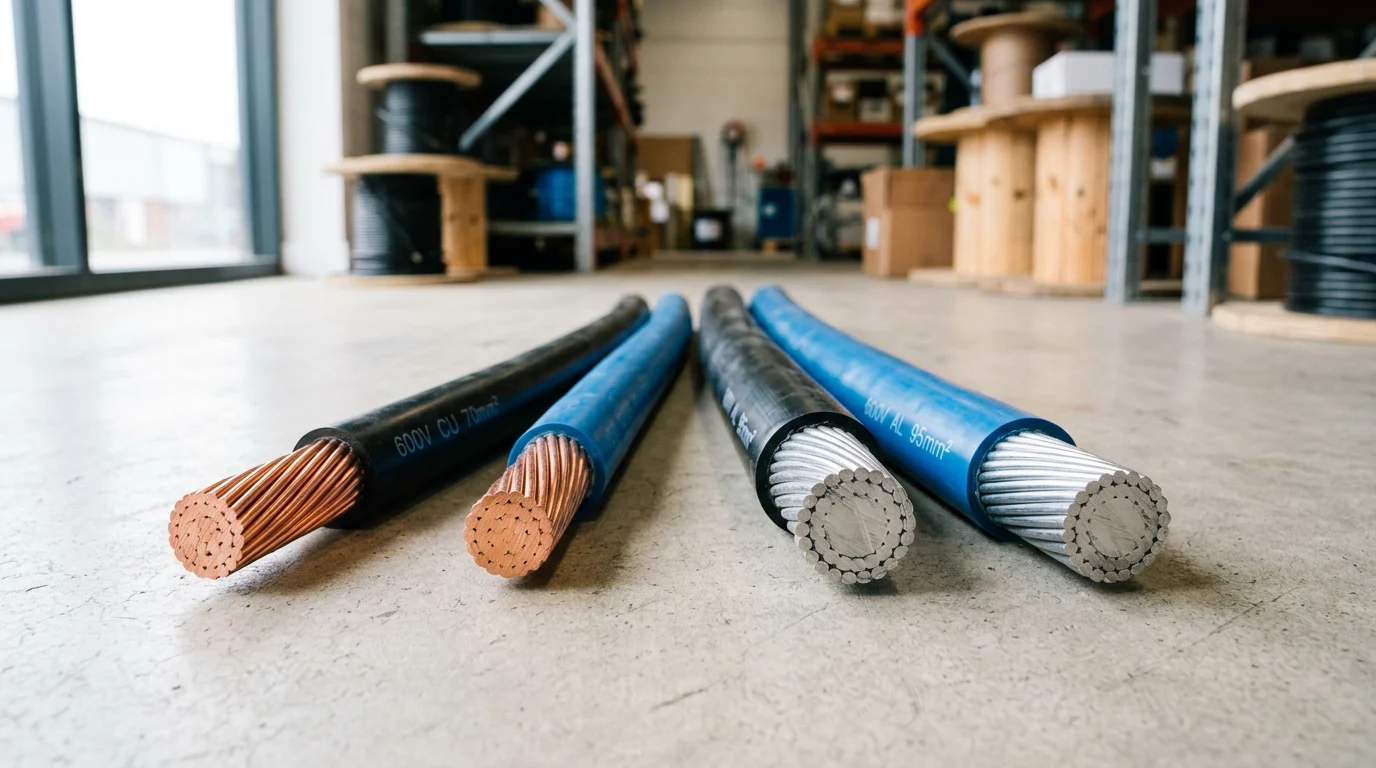
Cable buyers entering 2026 face a tougher decision than simply choosing the lower quote. Copper and aluminum now sit at the center of cost control, reliability planning, and supply-chain risk management, especially as electrification, renewable energy builds, and infrastructure upgrades accelerate demand. Copper offers proven conductivity, compact sizing, and strong long-term value, while modern aluminum can reduce material and freight costs when engineered correctly. This guide compares the two options through a procurement lens, covering price drivers, installation constraints, compliance considerations, and total cost of ownership so project teams can make defensible sourcing decisions before locking in specifications or bulk orders.
Aluminum vs Copper Cable Procurement Basics
Welcome to the evolving landscape of cable procurement in 2026. For those managing electrical infrastructure, renewable energy projects, or commercial builds, choosing between aluminum and copper is a major financial and technical strategy. As the industry pushes further into an era dominated by rapid electrification, anticipated supply chain bottlenecks, tariff exposures, and strict sustainability mandates, sourcing strategies are shifting fast. Understanding the fundamentals is essential for making informed purchasing decisions that balance budget constraints with system reliability.
Key Differences Between Aluminum and Copper Cables
At their core, the differences between these two metals come down to physics, weight, and economics. Annealed copper is the traditional gold standard of the electrical industry. It is highly conductive, incredibly durable, and easy to work with in tight spaces. Copper boasts a thermal conductivity that prevents overheating in dense bundles, making it highly forgiving during installation.
Modern 8000-series aluminum, conversely, is a highly efficient alternative. It is significantly lighter and more cost-effective, but requires more physical space to carry the same electrical load. Aluminum is not a direct drop-in replacement for copper; it is a distinct material that behaves differently under thermal stress. Because aluminum expands and contracts more than copper, termination points, lugs, and connectors must be specifically dual-rated (such as AL7CU or AL9CU). Safe installation requires mandatory anti-oxidant compounds at connection points and strict adherence to torque requirements to prevent galvanic corrosion and loosening over time. Buyers must also comply with specific NEC/NFPA code restrictions, such as common prohibitions on small-gauge aluminum branch circuits in residential and certain commercial occupancies.
Main Cost Drivers for Buyers in 2026
The cost gap between the two metals remains a primary driver for procurement strategies. As an illustrative estimate for 2026, copper prices on the London Metal Exchange (LME) frequently fluctuate between $8,500 and $9,500 per metric ton, while aluminum ranges from $2,200 to $2,600 per metric ton. However, procurement teams must recognize that bulk cable pricing is typically indexed to metal markets via Manufacturer's/Foundry Freight (MF/FF) adjustment formulas rather than static LME spot rates. Understanding these formulas is critical when negotiating contracts.
Raw metal pricing is only one component of the Total Cost of Ownership (TCO). A comprehensive TCO analysis must factor in extrusion costs, insulation materials (like XLPE or PVC), and freight. While aluminum's lighter weight can yield shipping cost reductions of 20% to 30% per container load compared to heavy copper reels, these savings must be weighed against installation realities. Because standard aluminum cables are physically thicker, they often require larger conduits and wider cable trays. The TCO must also account for installation labor cost differentials, long-term electrical operating losses, and copper's significantly higher end-of-life scrap value, which alters the true long-term project economics.
Performance, Compliance, and Documentation

Beyond initial capital expenditures, field performance and long-term reliability are paramount. Cost savings on a procurement spreadsheet can evaporate instantly if a cable fails during peak load conditions. It is critical to match the metal's physical properties with the project's strict compliance and safety requirements.
Conductivity, Ampacity, Weight, and Installation Factors
A standard industry benchmark is that aluminum possesses approximately 61% of the electrical conductivity of copper. To match the ampacity—or current-carrying capacity—of a copper cable, an aluminum conductor must typically be increased by one or two AWG sizes. While this generally results in a larger cross-sectional area, standard NEC/IEC ampacity tables already account for these material differences, and modern compact-stranded aluminum designs can significantly mitigate conduit size penalties. It is also crucial to account for higher resistive energy losses (I²R) over long aluminum feeders, which can materially affect long-term operating costs.
| Feature | Annealed Copper Cable | 8000-Series Aluminum Cable |
|---|---|---|
| Conductivity | 100% (Standard Benchmark) | ~61% |
| Density / Weight | Heavy (8.96 g/cm³) | Light (2.70 g/cm³) |
| Tensile Strength | High (~210 MPa) | ~90–150 MPa (engineered alloys) |
| Flexibility | Excellent | Moderate |
Even with an increased diameter, an aluminum cable weighs approximately 50% less than its copper equivalent. This weight reduction significantly benefits structural load management. For instance, when procuring solar cable for large-scale commercial rooftop installations, utilizing aluminum drastically reduces physical stress on mounting hardware and simplifies handling for installation crews. However, because aluminum requires a larger diameter to achieve equivalent ampacity, its overall minimum bending radius increases, necessitating wider sweeps in conduit layouts.
Standards, Testing, and Required Supplier Documents
Sourcing materials requires rigorous verification, as electrical inspectors enforce strict compliance standards. Procurement specifications should mandate adherence to international standards such as IEC 60228 for conductors, and UL 44 or UL 854 depending on the application. Instead of relying on generic quality badges, buyers must require a concrete checklist of documents: UL/ETL certificates of compliance, factory audit reports, and country-of-origin statements for tariff classification. Suppliers unable to provide this proper documentation should be disqualified.
Before finalizing any purchase order, buyers must require a comprehensive Mill Test Report (MTR) tracing the metal's purity. Copper specifications should demand 99.9% purity; for aluminum, the requirement must specify the 8000-series alloy. This modern alloy is specifically engineered to mitigate the creep and thermal expansion risks that plagued older aluminum wiring systems. Additionally, procurement teams should require verifiable testing standards, such as IEC 60502 for extruded solid dielectric cables and ASTM B800 for 8000-series aluminum alloy wire.
Practical Sourcing and Selection Steps
With the technical and financial parameters established, executing the purchase requires a systematic, repeatable approach. Proper sourcing strategies prevent costly supply chain delays and mismatched inventory, ensuring projects remain on schedule and within budget.
Procurement Checklist for Cable Specifications
A standardized Request for Quotation (RFQ) checklist eliminates supplier guesswork. First, define the exact voltage rating and insulation type required (for example, 600V, THHN/THWN-2). Next, establish Minimum Order Quantities (MOQs). As an illustrative baseline, standard MOQs for custom extrusions typically range from 3,000 to 5,000 meters.
Lead times represent another critical checkpoint.
Key Takeaways
- Compare aluminum and copper using total cost of ownership, including metal price, freight, installation labor, conduit size, electrical losses, and scrap recovery.
- Use aluminum only with properly rated connectors, anti-oxidant compounds where required, and manufacturer-specified torque practices to reduce loosening and corrosion risks.
- Plan for larger conduits and cable trays when specifying aluminum because it needs more physical cross-section than copper for the same electrical load.
- Review cable quotes against MF/FF or similar metal adjustment formulas instead of relying only on LME spot prices.
- Factor in 2026 market volatility, with copper estimated around $8,500–$9,500 per metric ton and aluminum around $2,200–$2,600 per metric ton.
- Choose copper for compact, high-density, or heat-sensitive installations, and consider aluminum where budget, weight, and large feeder runs dominate the decision.
Frequently Asked Questions
Is aluminum cable always cheaper than copper cable?
Usually on material cost, yes, but not always on total cost. Aluminum’s lower metal price and lighter weight can reduce procurement and freight costs, but larger conduits, wider trays, special connectors, labor, losses, and lower scrap value must be included in the TCO.
Can aluminum cable directly replace copper cable?
No. Aluminum requires larger conductor sizes for the same load and must use properly rated terminations, such as AL7CU or AL9CU connectors. Installers must also follow torque requirements and use anti-oxidant compounds where specified.
Why is copper preferred for tight or high-density installations?
Copper has higher conductivity, better thermal performance, and smaller conductor size for the same ampacity. This makes it easier to install in crowded panels, conduits, cable trays, and applications where space and heat buildup are major concerns.
What aluminum cable type is commonly used in modern projects?
Modern 8000-series aluminum alloy is widely used because it improves mechanical performance compared with older aluminum conductors. It is still not identical to copper and must be installed according to applicable NEC/NFPA rules and manufacturer instructions.
How should buyers compare copper and aluminum cable prices in 2026?
Buyers should compare indexed contract pricing, not just spot metal prices. Cable quotes often use MF/FF adjustment formulas tied to metal markets, plus insulation, extrusion, logistics, and project-specific installation costs.


