

 Send Email
 Whatsapp


PENTECH Blue Ocean New article: Offshore photovoltaic current situation and future development trend exploration

Offshore photovoltaics represent a transformative force in renewable energy. These systems harness solar power on water, offering vast potential for clean energy generation. Their development addresses critical global energy demands. Innovations, such as advanced Solar Cable technology, ensure efficient energy transmission, making offshore photovoltaics a cornerstone of sustainable energy solutions.
Key Takeaways
- Offshore solar panels use sunlight on water to make clean energy. This helps lower the use of oil and gas.
- New materials and designs, like rust-proof panels and easy-to-build platforms, make these systems work better and last longer.
- More money is being spent on offshore solar. Governments and companies see it as a way to reach green energy goals.
Current State of Offshore Photovoltaic Technology

Technological Advancements
Offshore photovoltaic technology has seen remarkable progress in recent years. Engineers have developed floating solar panels that can withstand harsh marine environments. These panels use advanced materials to resist corrosion and maintain efficiency. Improved anchoring systems now provide stability even in turbulent waters. Additionally, energy transmission has become more reliable with innovations in solar cable technology. These cables ensure efficient power transfer from offshore installations to onshore grids.
Adoption Rates and Deployment
Countries worldwide are increasingly adopting offshore photovoltaics. Coastal nations with limited land for solar farms find this technology particularly appealing. China and Japan lead in deployment, with large-scale floating solar farms already operational. Europe has also embraced offshore photovoltaics, integrating them into renewable energy strategies. Governments and private companies continue to invest in pilot projects to test scalability and efficiency.
Challenges in Durability and Maintenance
Despite advancements, durability remains a significant challenge. Offshore solar panels face constant exposure to saltwater, wind, and waves. These conditions can reduce their lifespan and efficiency. Maintenance poses another hurdle due to the remote locations of installations. Specialized equipment and skilled personnel are often required for repairs. Addressing these challenges will be crucial for the long-term success of offshore photovoltaics.
Emerging Trends and Innovations
Integration with Other Renewable Energy Systems
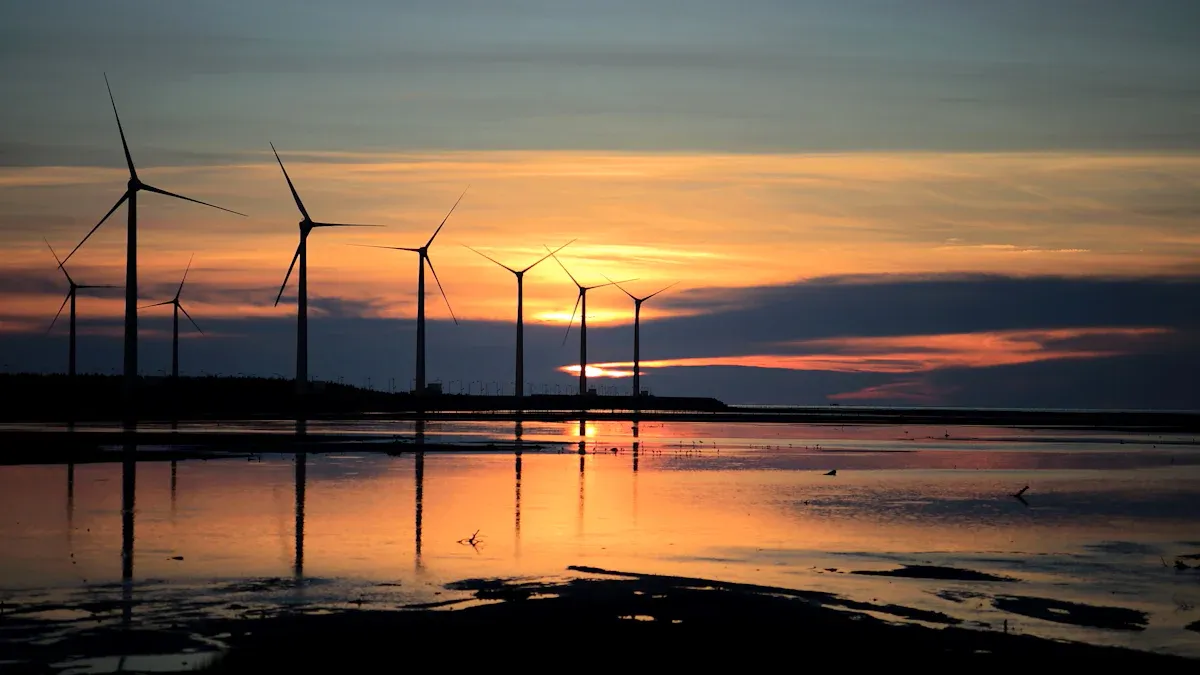
Offshore photovoltaics are increasingly being integrated with other renewable energy systems. Hybrid systems that combine floating solar panels with offshore wind turbines are gaining attention. These systems maximize energy production by utilizing both solar and wind resources in the same location. For example, some projects in Europe have successfully paired floating solar farms with hydropower reservoirs. This integration ensures a more consistent energy supply by balancing fluctuations in solar and wind output.
Combining multiple renewable sources enhances efficiency and reduces reliance on fossil fuels. It also optimizes the use of available space, especially in regions with limited land resources.
Advancements in Materials and Efficiency
Material science plays a critical role in improving offshore photovoltaic systems. Researchers are developing solar panels with higher efficiency rates and better resistance to harsh marine conditions. For instance, perovskite-based solar cells show promise due to their lightweight nature and high energy conversion rates. Anti-corrosion coatings and self-cleaning surfaces are also being introduced to extend the lifespan of panels.
- Key advancements include:
- Enhanced durability through innovative materials.
- Improved energy output with advanced photovoltaic cells.
- Reduced maintenance needs with self-cleaning technologies.
These innovations make offshore photovoltaics more reliable and cost-effective.
Innovations in Floating Solar Panel Designs
Floating solar panel designs are evolving to meet the challenges of offshore environments. Engineers are creating modular platforms that can adapt to varying water levels and wave conditions. Some designs incorporate tracking systems that adjust the angle of panels to follow the sun, increasing energy capture.
Modular and adaptive designs improve scalability and resilience, making offshore photovoltaics a viable solution for diverse marine settings.
Market Dynamics and Economic Considerations
Investment Trends in Offshore Photovoltaics
Investment in offshore photovoltaics has grown significantly in recent years. Governments and private entities recognize the potential of this technology to meet renewable energy goals. Countries like China, Japan, and the Netherlands have allocated substantial funds to develop large-scale floating solar farms. Private investors are also showing interest due to the promising returns and long-term sustainability of these projects.
According to recent reports, global investment in offshore photovoltaics is expected to grow by 20% annually over the next decade. This trend highlights the increasing confidence in the technology's scalability and profitability.
Cost Challenges and Solutions
Offshore photovoltaic systems face high initial costs. Expenses related to installation, maintenance, and specialized equipment often deter widespread adoption. However, advancements in technology are helping to reduce these costs. For instance, modular designs and improved solar cable technology streamline installation processes, lowering labor and material expenses. Governments also provide subsidies and tax incentives to encourage investment in this sector.
- Key cost-reduction strategies include:
- Utilizing lightweight materials for easier transport and installation.
- Developing automated maintenance systems to minimize operational costs.
- Offering financial incentives to offset initial investments.
Pilot Projects and Their Outcomes
Pilot projects play a crucial role in demonstrating the feasibility of offshore photovoltaics. One notable example is the Sihong Floating Solar Farm in China, which has successfully integrated solar panels with a hydropower reservoir. This project has shown that offshore photovoltaics can deliver consistent energy output while minimizing environmental impact. Similar initiatives in Europe and Southeast Asia have provided valuable insights into optimizing design and deployment strategies.
These pilot projects serve as blueprints for future large-scale installations, proving the viability of offshore photovoltaics in diverse environments.
Environmental and Regulatory Considerations
Sustainability and Ecological Impact
Offshore photovoltaics offer a sustainable energy solution, but their ecological impact requires careful evaluation. Floating solar farms reduce the need for land-based installations, preserving valuable terrestrial ecosystems. They also minimize greenhouse gas emissions by replacing fossil fuel-based energy sources. However, these systems can affect aquatic ecosystems. Shading from solar panels may alter water temperature and light penetration, impacting marine life.
Studies suggest that proper site selection and design adjustments can mitigate these effects. For example, spacing panels to allow sunlight to reach the water can help maintain aquatic biodiversity.
Regulatory Frameworks and Incentives
Governments play a pivotal role in promoting offshore photovoltaics through regulatory frameworks and incentives. Clear guidelines ensure safe and efficient deployment of these systems. Many countries have introduced policies to streamline permitting processes and reduce bureaucratic hurdles. Financial incentives, such as tax credits and subsidies, encourage investment in this sector.
- Examples of supportive measures include:
- Feed-in tariffs to guarantee stable returns for energy producers.
- Grants for research and development of innovative technologies.
- Zoning regulations to identify suitable locations for installations.
These initiatives create a favorable environment for the growth of offshore photovoltaics.
Addressing Environmental Concerns
Environmental concerns surrounding offshore photovoltaics focus on their potential impact on marine ecosystems. Noise and vibrations during installation may disturb aquatic species. Additionally, improper disposal of materials could lead to pollution. Addressing these issues requires adopting eco-friendly practices.
Using biodegradable materials and conducting environmental impact assessments can minimize harm. Collaboration between scientists, policymakers, and industry leaders ensures sustainable development of offshore photovoltaic systems.
The Role of Solar Cable in Offshore Photovoltaics
Importance of Solar Cable in Energy Transmission
Solar cable plays a vital role in offshore photovoltaic systems. It serves as the backbone for transmitting electricity generated by floating solar panels to onshore grids. These cables ensure efficient energy transfer over long distances, maintaining minimal power loss. Offshore environments demand cables with high durability to withstand harsh conditions, including saltwater exposure and strong currents. Reliable solar cable technology is essential for connecting offshore installations to the broader energy network.
Without robust solar cables, the energy generated offshore would fail to reach consumers efficiently. This highlights their critical role in the success of offshore photovoltaics.
Innovations in Solar Cable Technology
Recent advancements in solar cable technology have significantly improved performance and reliability. Engineers have developed cables with enhanced insulation materials to resist corrosion and mechanical stress. Some innovations include lightweight designs that simplify installation and reduce costs. Heat-resistant coatings now allow cables to handle higher energy loads without degradation. Additionally, smart monitoring systems embedded in cables can detect faults early, ensuring uninterrupted energy transmission.
- Key innovations include:
- Corrosion-resistant materials for extended lifespan.
- Lightweight designs for easier deployment.
- Smart systems for real-time monitoring and maintenance.
These advancements make solar cables more efficient and adaptable to offshore applications.
Challenges in Offshore Applications
Offshore environments present unique challenges for solar cable deployment. Constant exposure to saltwater accelerates wear and tear, reducing cable lifespan. Strong underwater currents and shifting seabeds can damage cables or disrupt their placement. Installation and maintenance require specialized equipment and expertise, increasing operational costs. Addressing these challenges involves using advanced materials and innovative designs tailored for marine conditions.
Overcoming these obstacles is crucial for ensuring the long-term viability of offshore photovoltaic systems.
Offshore photovoltaics have advanced significantly, with innovations in materials, designs, and integration strategies. Emerging trends, such as hybrid renewable systems and smart solar cables, promise transformative impacts.
Offshore photovoltaics hold the potential to revolutionize global energy systems. Their scalability and sustainability position them as a vital solution for achieving future energy goals.
FAQ
What are the main benefits of offshore photovoltaics?
Offshore photovoltaics provide clean energy without using land. They reduce greenhouse gas emissions and integrate well with other renewable systems, offering a sustainable energy solution.
How do floating solar panels withstand harsh marine conditions?
Engineers use corrosion-resistant materials and advanced anchoring systems. These innovations ensure durability and stability, even in challenging offshore environments.
Are offshore photovoltaics cost-effective?
Initial costs are high, but advancements in technology and government incentives reduce expenses. Over time, these systems become more economical due to their long-term energy production efficiency.