

 Send Email
 Whatsapp


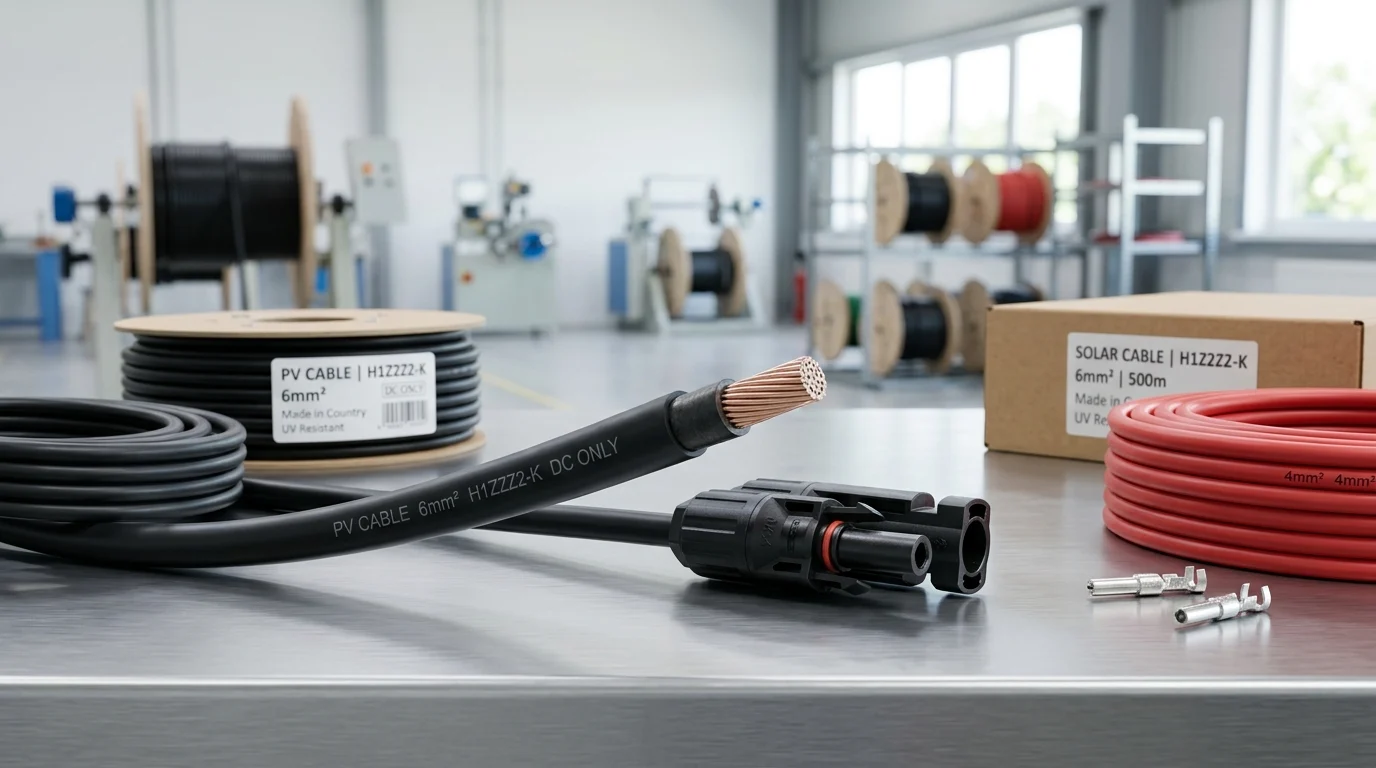
Introduction
For utility-scale solar projects, cable procurement can quietly absorb a larger share of capital cost than many teams expect, especially when distributor margins and volatile metal prices are built into every order. This case study examines how sourcing PV Cables directly from factories changed the cost structure of a large installation, where the savings came from, and which project conditions made the approach practical. Readers will see the commercial tradeoffs behind direct purchasing, including pricing transparency, payment terms, and supply-chain control, before the article moves into the project profile, sourcing model, and measured results.
Business Case for Direct Sourcing from PV Cable Factories
Solar developers and Engineering, Procurement, and Construction (EPC) firms constantly seek avenues to optimize project economics. Transitioning from traditional distributor networks to a direct procurement model—as highlighted in this PV cable factories direct sourcing case study—presents a compelling opportunity to reduce capital expenditures. By eliminating intermediaries, large-scale solar installations can capture significant margin improvements while maintaining strict supply chain transparency.
Commercial Benefits
The primary driver for engaging manufacturers directly is substantial cost reduction. Intermediary markups typically add between 15% and 30% to the baseline cost of photovoltaic wire. By executing a direct purchase agreement, developers can secure raw material-linked pricing, which is particularly beneficial when copper and aluminum markets experience volatility.
In a recent 100 MW utility-scale solar project, direct sourcing yielded a 22% reduction in total DC cabling costs, equating to hundreds of thousands of dollars in savings. Furthermore, direct buyers often negotiate favorable payment terms, such as a 30% advance and 70% against the Bill of Lading, improving project cash flow compared to the strict net-30 terms mandated by regional wholesale distributors.
Best-Fit Project Conditions
Direct sourcing is not universally applicable; it requires specific project profiles to be economically viable. Minimum Order Quantities (MOQs) for direct factory runs generally start at 50 kilometers per cross-section (e.g., 4mm² or 6mm²). Therefore, utility-scale projects exceeding 20 MW or portfolios of aggregated commercial and industrial (C&I) installations are the ideal candidates.
Projects with extended development timelines—typically allowing for a 12- to 16-week procurement and shipping window—are best positioned to absorb the longer lead times associated with international freight. Conversely, fast-track projects requiring immediate material availability are better served by localized distributor inventory, despite the significant price premium.
Specifications, Compliance, and Factory Qualification

Bypassing domestic distributors transfers the burden of quality assurance and compliance directly to the procurement team. Establishing rigorous technical benchmarks and conducting thorough due diligence on prospective manufacturing partners is critical to mitigating operational risks over the 25-year design life of a solar asset.
Technical and Certification Requirements
Photovoltaic Cables operate in harsh environmental conditions, enduring extreme temperature fluctuations, ultraviolet radiation, and mechanical stress. Direct procurement contracts must explicitly mandate adherence tointernational standards, primarily EN 50618 (H1Z2Z2-K) for European markets or Ul 4703 for North American jurisdictions.
Specifications should dictate electron-beam cross-linked insulation materials and a minimum system voltage rating of 1500V DC. Furthermore, thermal endurance tests must verify a conductor operating temperature of up to 120°C for at least 20,000 hours. Failing to specify these parameters can result in accelerated jacket degradation, ground faults, and catastrophic system downtime.
Factory Capability Evaluation
Evaluating a manufacturer extends beyond reviewing specification sheets; it requires assessing production capacity, quality control infrastructure, and raw material sourcing. High-caliber facilities utilize automated optical inspection systems to maintain a defect rate below 0.1%. Procurement teams must verify the factory's annual throughput to ensure they can meet project delivery schedules without subcontracting to unvetted third parties.
| Capability Metric | Tier 1 Direct Manufacturer | Regional Distributor/Wholesaler |
|---|---|---|
| Standard MOQ | 50 km+ per specification | 1 km (available from stock) |
| Typical Lead Time | 6 to 10 weeks (production + transit) | 1 to 3 days (domestic delivery) |
| Customization | High (custom printing, specific spool sizes) | Low (standard off-the-shelf only) |
| Cost Premium | Baseline factory pricing | 15% to 30% markup applied |
| Defect Tolerance | < 0.1% (direct factory warranty) | Varies (reliant on OEM warranty) |
Execution, Quality Control, and Decision Guidance
Realizing the financial advantages of direct manufacturing relationships requires flawless execution in logistics and contract administration. Without robust oversight, the anticipated savings can quickly be eroded by shipping delays, customs penalties, or quality disputes upon delivery.
Sourcing, Logistics, and Contract Control
Effective logistics management is the linchpin of international cable procurement. Ocean freight from major manufacturing hubs typically requires 4 to 6 weeks of transit time, necessitating precise alignment with the project's construction schedule. Contracts must clearly define Incoterms, with Delivery Duty Paid (DDP) or Cost, Insurance, and Freight (CIF) being the most common structures used to manage risk transfer.
To safeguard against quality discrepancies, contracts should mandate third-party pre-shipment inspections (e.g., SGS or TÜV) to verify cross-sectional area, insulation thickness, and electrical resistance before the containers are sealed. Implementing a 5% to 10% retainage fee until site delivery and acceptance further incentivizes the factory to adhere strictly to the agreed-upon standards.
Final Decision Framework
The decision to bypass traditional supply chains hinges on a careful cost-benefit analysis tailored to the specific project. Procurement managers must weigh the 15% to 30% capital expenditure savings against the increased administrative burden, longer lead times, and foreign exchange risks.
For projects requiring over 100 kilometers of PV cable, the economies of scale heavily favor direct factory sourcing. Success requires a proactive approach: early engagement with manufacturers, strict adherence to global certification standards, and rigorous logistical planning. When executed correctly, direct sourcing not only optimizes immediate project economics but also establishes resilient, long-term supply chain partnerships for future solar developments.
Key Takeaways
- The most important conclusions and rationale for PV cable factories direct sourcing case study
- Specs, compliance, and risk checks worth validating before you commit
- Practical next steps and caveats readers can apply immediately
Frequently Asked Questions
When does direct sourcing from PV cable factories make financial sense?
It fits best for projects above 20 MW or aggregated C&I portfolios that can meet 50 km+ MOQs per cable size and accept 12–16 weeks for procurement and shipping.
How much can a solar project save by buying PV cable directly from factories?
Typical distributor markups add 15%–30%. In the case study, a 100 MW project cut total DC cabling costs by 22%, saving hundreds of thousands of dollars.
What technical specs should be locked into a direct PV cable purchase contract?
Specify EN 50618 or UL 4703 compliance, 1500V DC rating, electron-beam cross-linked insulation, and verified 120°C thermal endurance for 20,000 hours.
What factory checks help reduce quality risk when sourcing directly?
Confirm annual capacity, raw material traceability, no unauthorized subcontracting, certification validity, and automated inspection controls that keep defect rates below 0.1%.
When should buyers avoid direct sourcing from PV cable factories?
Avoid it for fast-track jobs needing immediate delivery or small orders below factory MOQ. In those cases, local distributors are usually faster, though more expensive.